
What happens to your guns when you die
Guns are one of the few things in an estate where doing it the casual way can actually be a crime. A relative who drives home with a parent's rifle, or an executor who leaves a pistol in the nightstand while cleaning out the house, may be breaking California law without realizing it. California has its own rules about who can receive a gun, what has to be reported, and what the executor can do in the meantime. Most of those rules are easy to follow once you know about them. The trouble is that most families don't learn them until they're already in the middle of an estate.
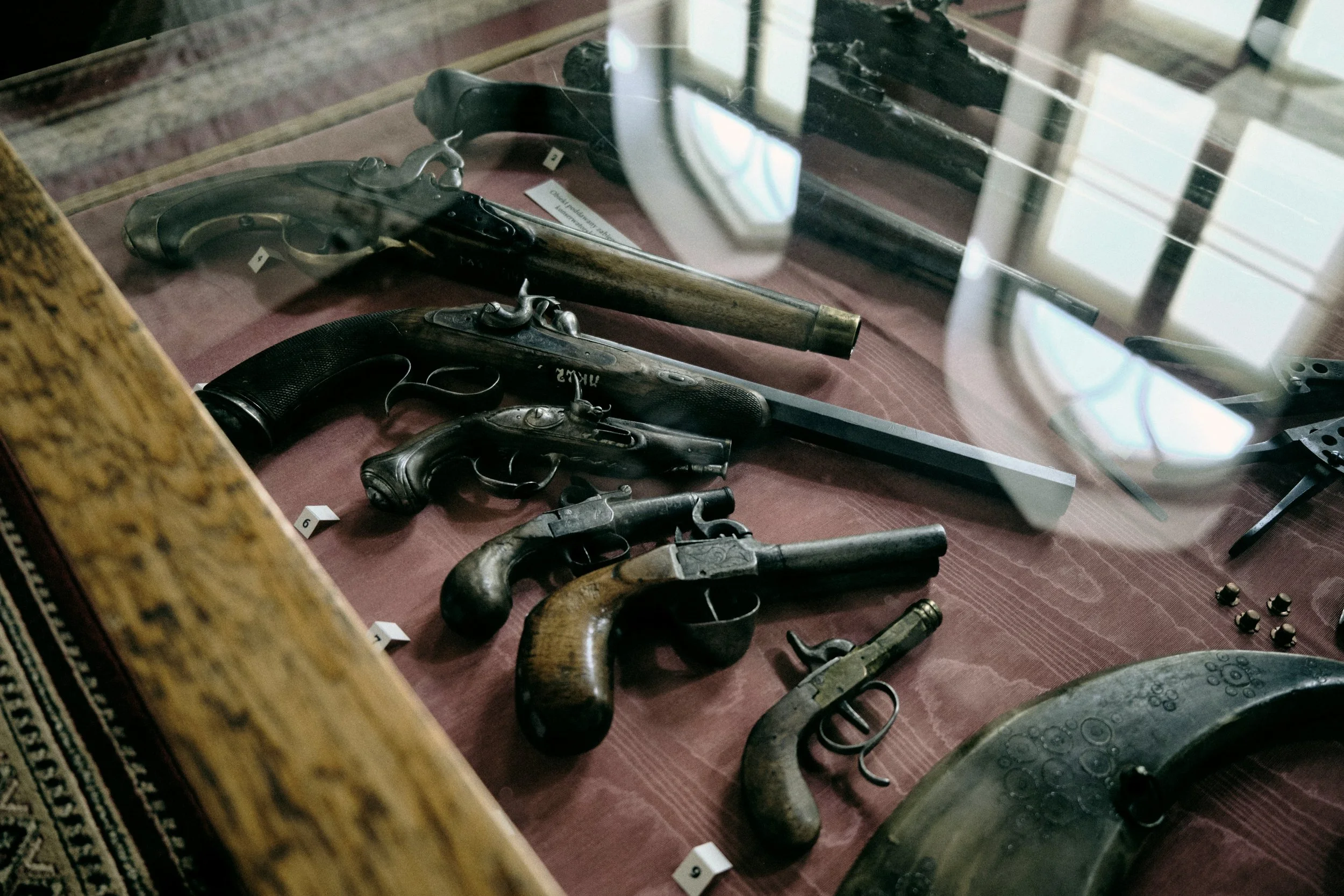
While the estate is still open
When someone dies, their executor (or administrator, if there's no will) takes legal possession of the estate's firearms. California calls this taking possession "by operation of law." It means the executor doesn't need a gun dealer just to hold onto the guns while settling the estate. The executor does have to report it to the California Department of Justice within 30 days. The DOJ form is called a Report of Operation of Law or Intra-Familial Firearm Transaction (BOF 4544A). The form is mailed in with a $19 processing fee and a copy of a California driver's license or ID.
An executor who takes possession of a deceased person's firearms must report the firearms to the California Department of Justice within 30 days.
If the estate plan was a living trust, the rules are a little stricter. A successor trustee also takes possession by operation of law, but they need a valid Firearm Safety Certificate before they take possession, on top of the 30-day report. The certificate comes from passing a short written test, which most gun stores give.
Then there's storage. Since January 1, 2026, every gun kept in a California home has to be in a gun safe or locked with an approved safety device. The only exception is when the person allowed to have it is carrying it or close enough to control it. A first violation is a fine of up to $250, a second is up to $500, and after that it's a misdemeanor. So if you're cleaning out a parent's house and there's a pistol in the nightstand, it shouldn't stay there. And if anyone living in the house is legally barred from having guns, it's a separate misdemeanor to keep firearms there unless they're locked up or in the owner's control.
Since January 1, 2026, every gun in a California home has to be in a gun safe or locked with an approved safety device, unless an authorized person is carrying it or has it within reach.
An executor also can't hand a gun, or even access to one, to someone who isn't allowed to have it. California makes it a crime to knowingly give a firearm, or possession or control of one, to a person barred from owning guns. That covers felony convictions and a range of other situations, like certain restraining orders and mental health holds. If you're an executor and you aren't sure about someone, don't guess. If the whole thing feels like too much, you can ask a local licensed dealer whether they'll hold the guns until the estate is ready to distribute them.
Who can take the guns, and how
California generally requires gun transfers to go through a licensed dealer, and the exceptions for inherited guns are more restrictive than you might think.
Children, grandchildren, parents, and grandparents. California calls these relationships "immediate family" for gun transfers. A family member in this group can skip the dealer if they're at least 18 and hold a Firearm Safety Certificate. They also have to file the same DOJ report within 30 days of taking possession.
A surviving spouse or registered domestic partner. When a gun passes to a surviving spouse without probate, the spouse takes it by operation of law, but still needs a Firearm Safety Certificate and the 30-day report.
Everyone else. Brothers, sisters, nieces, nephews, cousins, and friends aren't immediate family under this law. In most cases, plan on the transfer going through a licensed dealer, with the usual background check and waiting period.
Brothers, sisters, nieces, nephews, and friends generally can't receive an inherited gun in California without going through a licensed dealer.
So a grandchild can take a grandparent's pistol without a dealer, as long as they're 18 or older, have a safety certificate, and send in the report. If the same pistol were left to the owner's brother, he'd be going to a gun store.
Heirs who live in another state add another layer. Federal law lets someone who inherits a gun by will or intestate succession bring it home to their own state, if they can legally have it there. But California's rules still apply before anything leaves, and the other state may have rules of its own, so it's worth asking before anything crosses a state line. Going the other way, an immediate family member who inherits a gun in another state and brings it into California needs a safety certificate. They also have to report it within 30 days of bringing it in.
The guns that can't be passed down
Some firearms can't be inherited and kept in California at all. A registered assault weapon, for example. Whoever inherits one has 90 days to make it permanently unable to fire, sell it to a licensed dealer, get a special permit from the DOJ, or take it out of California. A registered .50 BMG rifle gets 180 days. The DOJ report form can't be used for assault weapons, and the DOJ puts it on the person filing to figure out whether a gun qualifies. Whether a rifle counts as an assault weapon depends on technical features, so if you aren't sure, have a dealer look at it before anyone takes it home.
A registered assault weapon can't be inherited and kept in California. The heir has 90 days to disable it, sell it to a licensed dealer, get a DOJ permit, or take it out of state.
Magazines are the other thing families miss. California bans possessing magazines that hold more than 10 rounds, with limited exceptions. When the ban took effect, the law gave owners three ways to get rid of them: take them out of state, sell them to a licensed dealer, or turn them in to law enforcement to be destroyed. A federal appeals court upheld the ban in March 2025, and as we write this in October 2026, a request for the U.S. Supreme Court to hear the case is still pending, so the ban remains in effect. If you find large magazines in an estate, ask before doing anything with them.
What you can do now
If you own firearms, a little planning saves your family a lot of guesswork.
Write down what you have, including make, model, and serial number, where each gun is kept, and how to get into the safe. Keep that list somewhere your executor or trustee can find it.
Say in your will or trust who gets which guns, and name a backup in case the person you chose can't legally take them.
Think about whether the people you're leaving guns to are immediate family, whether they live in California, and whether they'll need a safety certificate.
Check whether anything you own is a registered assault weapon or a magazine that holds more than 10 rounds, so your family isn't the one figuring that out.
Choose an executor or trustee who is comfortable dealing with firearms, or who knows to bring in someone who is.
When you're ready to put your plan together, firearms included, our team at Laurel Trust Law can help.